

BELCANDO® Puppy Granula Starter


BELCANDO® Puppy Granula Starter
Why choose BELCANDO Puppy Granula-Start?
Help your puppies take their first steps from milk towards solid food with BELCANDO Puppy Granula-Start, available in 1 kg and 5 kg options. Its fine granules can be prepared into a soft meal during weaning. Follow the preparation and feeding guidance on your current pack, monitor each puppy’s weight with your veterinarian, and always provide fresh drinking water.
The perfect step between milk and solid food. At the request of many dog breeders who raise their puppies with BELCANDO, we have developed BELCANDO Puppy Granula-Start, a special product for the first steps towards eating on their own.
Using a special process, this variety is “granulated” to a specific size fraction. This creates extra-small kibbles that can easily be mixed with BELCANDO puppy milk or water to form a porridge, or lightly combined with meat. Thanks to the sauce effect, a particularly tasty gravy coating forms when warm liquid is added.
After a short familiarisation period, the granules can also be fed dry. They taste familiar from the very first bite and help puppies transition smoothly through weaning.
Ratio of animal protein to total protein: 80% (Poultry 60%, Fish 15%, Gelatine 5%)
Our Vital Components



Made without



The copied highlights below mention amaranth and krill, but neither appears in the composition listed for this product. Their inclusion is unverified; refer to your current pack’s ingredient list before relying on these highlights.

Amaranth (inclusion unverified)

Marine zooplankton (Krill; inclusion unverified)
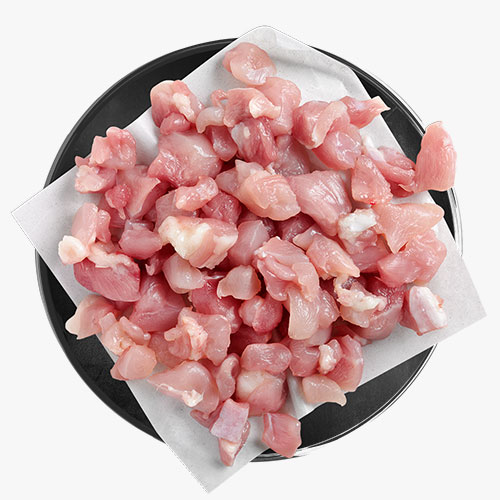
Fresh poultry
For more flavour.
The fine texture of BELCANDO Puppy Granula-Start makes the initial transition to solid food easier for puppies during the weaning phase.
When you gently mix 2-3 parts BELCANDO Puppy Granula-Start with 1 part warm (40-50 °C) water, an especially tasty gravy forms over the food particles. This stimulates the puppies to accept solid food. Later you can also feed the puppies BELCANDO Puppy Granula-Start dry as needed.
Average quantities for feeding puppies are listed separately in the table. The correct feeding quantity is best determined by regularly checking the dog’s weight. Fresh drinking water should be available at all times.
| Age in weeks | 3-5 kg* | 5-15 kg* | 15-25 kg* | 25-50 kg* | 50-80 kg* |
|---|---|---|---|---|---|
| 2-3** | 10 | 10 | 10-20 | 20-30 | 20-30 |
| 3-4** | 10-20 | 10-30 | 30-90 | 90-120 | 120-160 |
| 4-5** | 20-30 | 30-70 | 70-150 | 150-180 | 180-220 |
| 5-6** | 30-60 | 60-120 | 120-170 | 170-200 | 200-250 |
| 6-8*** | 40-90 | 90-150 | 150-250 | 250-340 | 250-400 |
Vitamin A 15,000 IU; Vitamin D3 1,500 IU; Vitamin E 150 mg; Taurine 500 mg; Copper (as copper(II) sulphate pentahydrate) 12.5 mg; Iron (as iron(II) sulphate monohydrate) 200 mg; Manganese (as manganese (II) oxide) 40 mg; Zinc (as zinc oxide) 125 mg; Iodine (as calcium iodate anhydrous) 2 mg; Selenium (as sodium selenite) 0.05 mg
Bacillus velezensis DSM 15544 (4b1820) 1.02 x 10⁹ CFU
Lecithin 2,400 mg; Tocopherol extracts from vegetable oils 48 mg